Life
“I find it so amazing when people tell me that electronic music has no soul. You can’t blame the computer. If there’s no soul in the music, it’s because nobody put it there.” — Björk
The systems that govern health, money, and legal standing get their own domains in the Field Guide. What remains is everything else: the conversations, the milestones, the meals, the trips, the slow accumulation of skills and relationships that constitute an actual life. The billionaire class has a staff for this too. Now you have one.
Li-1: Preparing for a Difficult Conversation
Strategy: Prepare + Draft See also: W-3: Working with Human Resources (for workplace conversations), H-7: Preparing for End-of-Life Conversations (for the hardest one). Russ Harris, The Happiness Trap (managing the emotions that make you avoid the conversation). Read This and You Will Be Happier (Guardian, 2026) on Monkey/T-Rex/Lion/Mouse personality types (reading your counterpart’s communication style) My Man Jeeves: One might observe that 40 years of research on interpersonal conflict converge upon a single finding of some consequence: how a difficult conversation begins predicts its outcome with approximately 96% accuracy. The words selected in the first three minutes, it would appear, determine most of what follows.[1] It is perhaps worth noting, then, that preparation is not a matter of personal preference. It is the intervention itself. One’s Agent can help one prepare. The Spec:
I need to have a difficult conversation with [relationship] about [topic].
My goal is [specific outcome — not “fix everything,” something concrete].
I’m worried about [specific thing that could go wrong].
I want to [preserve the relationship / set a clear boundary /
reach a specific agreement — choose one].
Please help me:
1. Identify the key thing I need to say clearly
2. Anticipate the most likely responses and how to handle them
3. Draft an opening statement I could use to start the conversation
What to do with the Output: Save this as a note on your phone. Read it once before you walk in. You don’t need to memorize the opening statement — just having it reduces the panic of “how do I start this.” If the conversation goes sideways, you can come back to your Agent afterward and ask: “It went like this: [describe]. What should I try next?”
Science Note: Gottman (1999) identifies the “soft startup” as the single highest-leverage intervention in difficult conversations — how you begin determines nearly everything that follows.[2]
Li-2: Writing a Eulogy
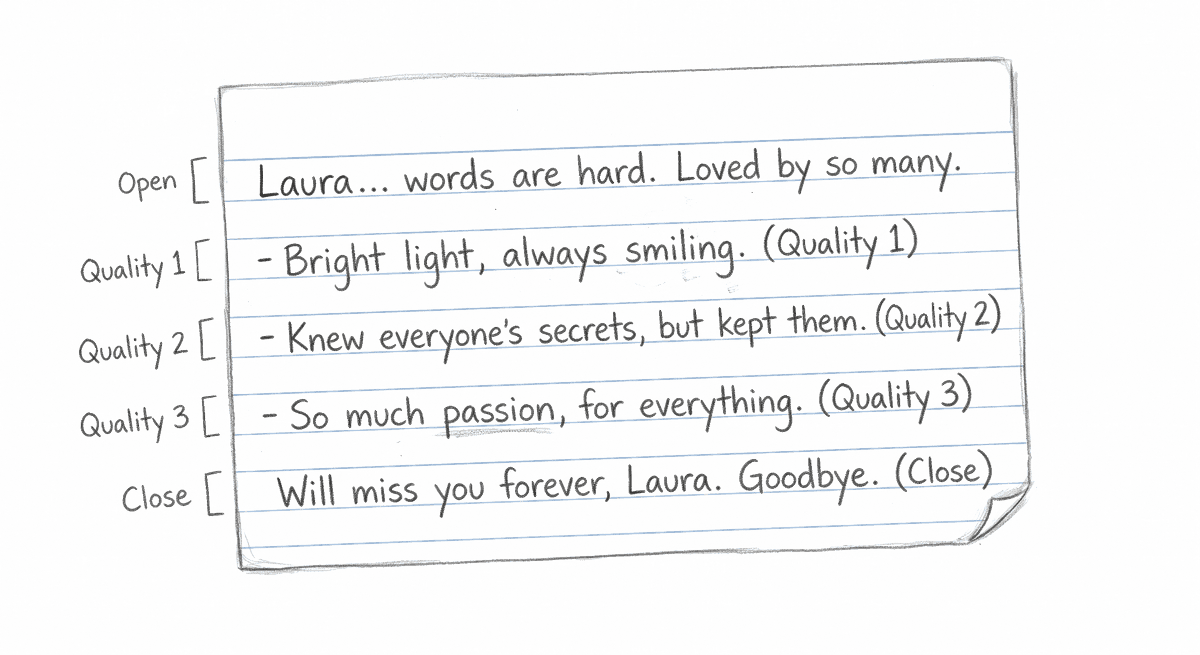
Strategy: Draft See also: Li-1: Preparing for a Difficult Conversation (the emotional preparation applies here too), H-7: Preparing for End-of-Life Conversations My Man Jeeves: A difficulty presents itself in that the eulogy is, for most persons, the one composition for which there is no second draft, no opportunity to revise after observing the reaction, and no possibility of beginning again. One might further note that it is composed under conditions of considerable emotional impairment and preserved online indefinitely. One’s Agent is equipped to furnish the structure. The life, however, one alone is in a position to supply. The Spec:
I need to write a eulogy for [relationship — “my father,” “my friend”].
Here are the things about them that I most want people to remember:
[list 3–5 specific memories, qualities, or stories]
The tone should be [celebratory / reflective / a mix].
The audience is [family and close friends / a large public service].
I have about [X] minutes.
Please draft a eulogy I can edit into my own voice.
The stories should come from what I’ve told you — please don’t
invent details I haven’t given you.
What to do with the Output: Edit it until it sounds like you, not like a machine. Read it out loud — twice. The parts that feel wrong in your mouth are the parts that need your words, not your Agent’s. Print it on a card you can hold. Having something in your hands steadies them.
Li-3: Recognizing a Scam
Strategy: Research + Draft See also: Li-1: Preparing for a Difficult Conversation (for talking to a loved one who has been targeted) My Man Jeeves: It would appear that the efficacy of the modern scam rests upon exploiting responses that are, in every other context, entirely wholesome: trust, urgency, deference to authority, the desire to be of assistance. The person who succumbs was not, one ventures to suggest, being foolish. They were being human in circumstances engineered by professionals to weaponize that humanity. The FTC reports that Americans lost over $10 billion to fraud in 2023. The shame that follows a successful scam suppresses reporting, with the result that the actual figure is rather higher. The shame, one might observe, is the second scam. One’s Agent can help one recognize the pattern before it completes and, should it have already completed, navigate the reporting and recovery process without judgment. The Spec:
I think I [or someone I care about] may be dealing with a scam.
Here is what happened: [describe the situation — the initial contact,
what was asked for, what was promised, what has been given so far].
Please:
1. Tell me if this matches a known scam pattern and which one
2. Explain what the scam is actually trying to accomplish
3. Tell me what to do RIGHT NOW — what to stop, who to call,
what to document
4. If money or information has already been sent, what recovery
options exist
Be direct. I need the honest answer.
What to do with the Output: If you are helping a loved one, lead with concern, not correction. The shame is already doing damage. Your Agent can help you draft that conversation (see Li-1). If you are the one targeted, file with the FTC at reportfraud.ftc.gov and your state attorney general. Speed matters — some financial transactions can be reversed within 24–48 hours.
Li-4: Planning Care for Aging
Strategy: Research + Navigate See also: H-7: Preparing for End-of-Life Conversations, M-6: Financial Coach (for Social Security and inheritance planning), L-1: Negotiating a Contract (for care facility agreements) My Man Jeeves: There arrives, in the course of most lives, a period when the person who attended to everything becomes the person who requires attending to. The reversal presents itself without training, without documentation, and without the emotional infrastructure one might reasonably expect. The American system, it would appear, assumes families will contrive a solution. Other nations constructed eldercare systems. One has one’s Agent and the Skills that follow. The Spec:
I am [beginning to plan for / currently managing] care for
[my parent / relative / spouse] who is [age] and dealing with
[describe the situation: declining mobility, cognitive changes,
recent diagnosis, can no longer live alone, etc.].
My current situation:
— Where they live now: [with me / alone / assisted living / other]
— Their financial situation: [brief — pension, savings, Medicare,
Medicaid, none of these]
— What help they currently have: [family, home aide, none]
— What is changing or has changed: [the specific trigger]
Please help me:
1. Understand what level of care they may need now and next
2. What programs or benefits they may qualify for
3. What legal documents should be in place if they aren’t already
4. What decisions I should NOT delay
What to do with the Output: Make a list of the time-sensitive items — power of attorney, healthcare proxy, benefit applications — and do those first. The emotional work is real but the paperwork has deadlines. See H-7 for the conversation itself.
Medicaid is the primary payer for long-term care in the United States, but qualifying requires near-poverty. The “spend-down” — depleting assets to meet eligibility thresholds — is the mechanism most families encounter. The five-year lookback period means gifts or transfers made within five years of application trigger penalties. The One Big Beautiful Bill Act (2025) added new constraints: a $1 million home equity cap for long-term care eligibility starting in 2028, retroactive coverage reduced from 90 to 30 days before application, and six-month eligibility reverification. Asset limits, exempt property, and spousal protections vary significantly by state — ask your Agent for the current rules in yours.[4]
Veterans note: cross-reference H-6 for VA Aid and Attendance. Additional programs include VA Geriatrics and Extended Care (GEC), VA respite care, VA Community Living Centers (VA nursing homes), and the VA Caregiver Support Program (1-855-260-3274). Ask your Agent for eligibility requirements.
Li-5: Planning Trips
Strategy: Prepare + Navigate See also: Li-10: Learn a Language, Tr-3: Public Transit, Cycling, and Walkability My Man Jeeves: One observes that the travel planning enterprise has been divided between two industries: the agencies that charge for expertise and the search engines that charge for attention. Both, it would appear, optimize for their own revenue rather than one’s experience. One’s Agent maintains no advertising revenue, no partner hotels, and no particular reason to recommend the flight with the most disagreeable layover on the grounds that it pays a higher affiliate commission. The Spec:
I am planning a trip to [destination] for [number of people]
from [dates]. My budget is [range].
What matters most to me: [relaxation / adventure / culture /
food / seeing family / something specific]
Constraints: [kids’ ages, mobility issues, dietary needs,
visa requirements, anxiety about flying, first time abroad, etc.]
Please help me:
1. Build a realistic itinerary that accounts for travel time
and energy — not a highlight reel
2. Flag things that could go wrong and how to prepare for them
3. Tell me what I’m likely to overpay for and where to save
4. Give me the three things about this destination that most
travelers wish they’d known before arriving
What to do with the Output: Print the itinerary. Share it with everyone going. Ask your Agent for a packing list specific to the destination and season. Before you leave, ask: “What documents do I need, and what happens if I lose them?”
Li-6: Finding Restaurants
Strategy: Research + Decide See also: Li-5: Planning Trips (for restaurants while traveling), Ch-4: Cooking and Culinary Skills (for eating in) My Man Jeeves: It would appear that the prevailing restaurant recommendation algorithms optimize for establishments that pay for placement or generate engagement, rather than for the most suitable meal in one’s vicinity at one’s price point for one’s actual preferences. One’s Agent maintains no paid placements. It will also, one feels compelled to note, refrain from passing judgment should one desire chicken fingers at an establishment with tablecloths. The Spec:
I’m looking for a restaurant in [location] for [occasion:
date night / family dinner / quick lunch / celebration / solo meal].
Number of people: [X]
Budget: [per person range]
Must accommodate: [dietary restrictions, kids, wheelchair access,
noise sensitivity, etc.]
What I’m in the mood for: [cuisine type, or “surprise me”]
What I want to avoid: [specific dislikes or past bad experiences]
Give me 3–5 options with why each one fits, and tell me
which one you’d pick if you were me.
What to do with the Output: Pick the one that fits your mood, not the one that sounds most impressive. Check the hours and whether you need a reservation — your Agent may not have current information (see Li-5 on web search access by tool). If you’re going with other people, send them the short list and let them weigh in. The best restaurant for the night is the one everyone agrees to go to.
Li-7: Raising Kids
Strategy: Research + Navigate See also: Li-1: Preparing for a Difficult Conversation (for the hard talks), Li-4: Planning Care for Aging (the other end of the caregiving spectrum), H-17: Talking to Your Kids About Drugs My Man Jeeves: One might observe that every generation of parents is persuaded they are doing it wrong. This is not, one ventures to suggest, neurosis — it is a rational response to the circumstance that the stakes are a human life and the research continues to evolve. Dr. Spock advised the postwar generation to trust their instincts, which was considered revolutionary at the time. The current research indicates that instincts are a promising foundation but not, in themselves, sufficient. The billionaire class retains nannies, tutors, and developmental consultants on a permanent basis. One’s Agent has read the same developmental psychology they cite. The Spec:
I am a parent of a [age] child and I’m dealing with
[specific situation: behavioral issue, school decision,
developmental concern, family conflict, milestone question, etc.].
What I’ve tried: [if anything]
What I’m worried about: [the real fear, not the surface one]
My family situation: [relevant context — single parent, blended
family, co-parenting, grandparent involvement, etc.]
Please:
1. Tell me what the current research says about this
2. Give me 2–3 specific things I can do this week
3. Tell me what’s normal vs. what might need professional attention
4. Be honest about what the research doesn’t know yet
What to do with the Output: Parenting advice from any source — including your Agent — should be filtered through your knowledge of your specific child. If the advice doesn’t fit, say so: “That doesn’t match what I see with my kid. Here’s what actually happens: [describe]. What else should I try?” Your Agent adjusts. Books don’t. And if you feel guilty about how you’re doing — you will, every parent does, the research treats it as a baseline — that guilt is the tax on caring. It does not mean you are doing it wrong. It means you are paying attention. The number one skill worth teaching alongside any specific task, chores included, is knowing when to ask for help and how to evaluate the answer — that one doesn’t go out of date.
Li-8: Wellness Coach
Strategy: Research + Draft (Expert Role) See also: H-8: Wellness and Nutrition Coach (for physical health), H-13: Understanding Addiction, H-1: Understanding a Diagnosis. Russ Harris, The Happiness Trap (the ACT framework this Skill’s thought-pattern work builds on) My Man Jeeves: A difficulty of some consequence presents itself in the matter of mental health care in America, where the median wait for a new patient appointment is, by research estimates, between 6 and 10 weeks[9] and a single therapy session costs $100 to $250 out of pocket. One cannot help but observe that the persons who require assistance most urgently — the isolated, the overwhelmed, the financially strained — face the most formidable barriers to obtaining it. One’s Agent is not a therapist. It is, however, available at 2 AM when the therapist is not, and it is capable of performing several things a therapist would recommend one do between sessions. The Spec:
Act as a supportive wellness coach. I am not in crisis —
I want to work on [specific goal: managing stress, building
a journaling habit, improving sleep, processing a difficult
period, developing coping strategies, understanding my patterns].
My situation: [relevant context]
What I’ve tried: [if anything]
What’s getting in the way: [be honest — time, motivation,
shame, not knowing where to start]
Please:
1. Help me understand what might be going on
2. Suggest one specific practice I can start today
3. Tell me when this is something I should bring to
a professional instead
What to do with the Output: Start with the one thing. Not three things. One. If the Agent suggests journaling, write for five minutes tonight. If it suggests a breathing exercise, do it once. The compound effect of small consistent actions is better documented than the effect of ambitious plans that last three days.
Common wellness Expert Role specs:
Act as a cognitive behavioral coach. I keep having this thought
pattern: [describe the loop — catastrophizing, rumination,
all-or-nothing thinking, etc.].
Help me identify what’s happening and give me a specific
technique to interrupt it.
Act as a journaling coach. I want to start journaling but
I don’t know what to write about and I feel self-conscious.
Give me a simple framework I can use for 5–10 minutes a day
that doesn’t require me to be a good writer.
Act as an occupational therapy coach. I am struggling with
[daily living task: morning routine, household organization,
time management, sensory overload, task initiation] and I want
practical strategies, not motivational advice.
Li-9: Making a Household Budget That Holds
Strategy: Draft + Decide See also: M-6: Financial Coach, Ho-5: Understanding Your Utility Bill My Man Jeeves: The prevailing budgeting counsel, one might observe, assumes the difficulty is a matter of discipline. For most households, however, the difficulty is arithmetic — income that does not cover expenses, regardless of how disciplined the allocation. One’s Agent will not presume to lecture on the subject of lattes. It will assist in identifying where the money actually goes, determine the three largest levers available, and construct a plan that survives contact with reality. The Spec:
I want to build a household budget that actually works.
My situation:
— Monthly income (after taxes): [amount]
— Number of people in household: [X]
— Biggest expenses I know about: [rent, car, childcare, debt, etc.]
— What I’m struggling with: [running out before payday /
can’t save anything / don’t know where it goes / debt spiral /
one emergency away from crisis]
Please:
1. Help me categorize my spending into needs, wants, and debts
2. Identify the 2–3 biggest levers I have — the places where
a change would make the most difference
3. Build a realistic monthly plan that includes some flexibility
— a plan I’ll actually follow, not an ideal I’ll abandon
4. Tell me honestly: is this a budgeting problem or an income problem?
What to do with the Output: Track actual spending for one month before adjusting the budget. Most people are surprised by at least one category. Ask your Agent: “Here’s what I actually spent last month: [list]. How does this compare to the plan, and what’s the one change that would have the biggest impact?”
Li-10: Learn a Language
Strategy: Research + Navigate (Expert Role) See also: Li-5: Planning Trips (for travel-specific language prep) My Man Jeeves: Language immersion programmes, one notes, cost thousands of dollars. Duolingo is free and instructs one in how to say “the elephant drinks milk” in more than 40 languages. Private tutors charge $40 to $80 per hour and are available when their schedule permits. One’s Agent, by contrast, is available at once, possesses inexhaustible patience, betrays no visible disappointment when one conjugates the same verb incorrectly for the fifth time, and will conduct an actual conversation about the things one actually needs to say — rather than the things a textbook believes one should practise. The Spec:
Act as a patient language tutor for [language].
My current level: [complete beginner / basic phrases / conversational]
My goal: [travel / family communication / work / general learning]
What I struggle with most: [pronunciation / grammar / vocabulary /
understanding native speakers]
How would you suggest we work together in our conversations?
What to do with the Output: Start using it immediately. Language learning research consistently shows that production — trying to say things, getting them wrong, trying again — beats passive study. Your Agent can do something no textbook can: respond to what you say, correct you in real time, and adjust the difficulty to where you actually are rather than where a curriculum assumes you should be.
Common language Expert Role specs:
I’m traveling to [country] in [timeframe]. Teach me the 20 phrases
that will make the biggest difference — greetings, ordering food,
asking for help, being polite. Prioritize what locals actually
appreciate hearing from visitors.
I’m trying to reconnect with [language] that my [parent/grandparent]
spoke. I understand some when I hear it but I can’t produce it.
Start me where I am, not at the beginning.
I need to [give a presentation / attend a meeting / make small talk]
in [language] for work. My level is [X]. Help me prepare
the specific phrases and responses I’ll need.
Li-11: Escaping Social Media
Strategy: Research + Decide See also: Li-7: Raising Kids (for the screen time conversation), Li-8: Wellness Coach (for compulsive behavior patterns). Oliver Burkeman, Four Thousand Weeks (why the attention economy works and what to do instead) My Man Jeeves: The popular discourse, one observes, employs the phrase “screen time.” The research employs the phrase “social media.” These are not the same variable. Using the internet to ascertain how a carburetor functions is a rather different neurological event from scrolling a feed engineered to make one feel slightly worse about oneself at intervals calibrated to sustain the scrolling. The former is the most capable self-education infrastructure ever constructed. The latter is an engagement-optimization engine that colonized it. The intervention, it would appear, is not less internet. It is better internet. One’s Agent can help one construct it.
The Spec:
I want to reduce my social media use [or help my kid reduce theirs].
My current situation:
— Platforms I use most: [list them]
— How much time I estimate I spend: [hours/day]
— What I get out of it: [connection, news, entertainment, habit, nothing]
— What it costs me: [time, mood, sleep, focus, comparison anxiety]
— What I’ve tried: [app limits, deleting apps, cold turkey, nothing]
Please help me:
1. Understand the difference between purposeful internet use
and engagement-optimized consumption
2. Identify which of my current habits are serving me and which aren’t
3. Build a realistic reduction plan that doesn’t require
willpower I don’t have — change the cues, not the person
4. Suggest what to replace the habit with — the gap needs filling
or the habit comes back
What to do with the Output: Start with one platform. The one that makes you feel worst, or the one that eats the most time. Remove it from your phone — not your life, just your pocket. You can still use it on a computer, which introduces enough friction to break the automatic-checking loop. The research is clear: the harm concentrates in compulsive mobile checking, not in deliberate use.
The internet itself is not the variable either study measured as harmful — the feed sitting on top of it is.
Li-12: Developing a Habit
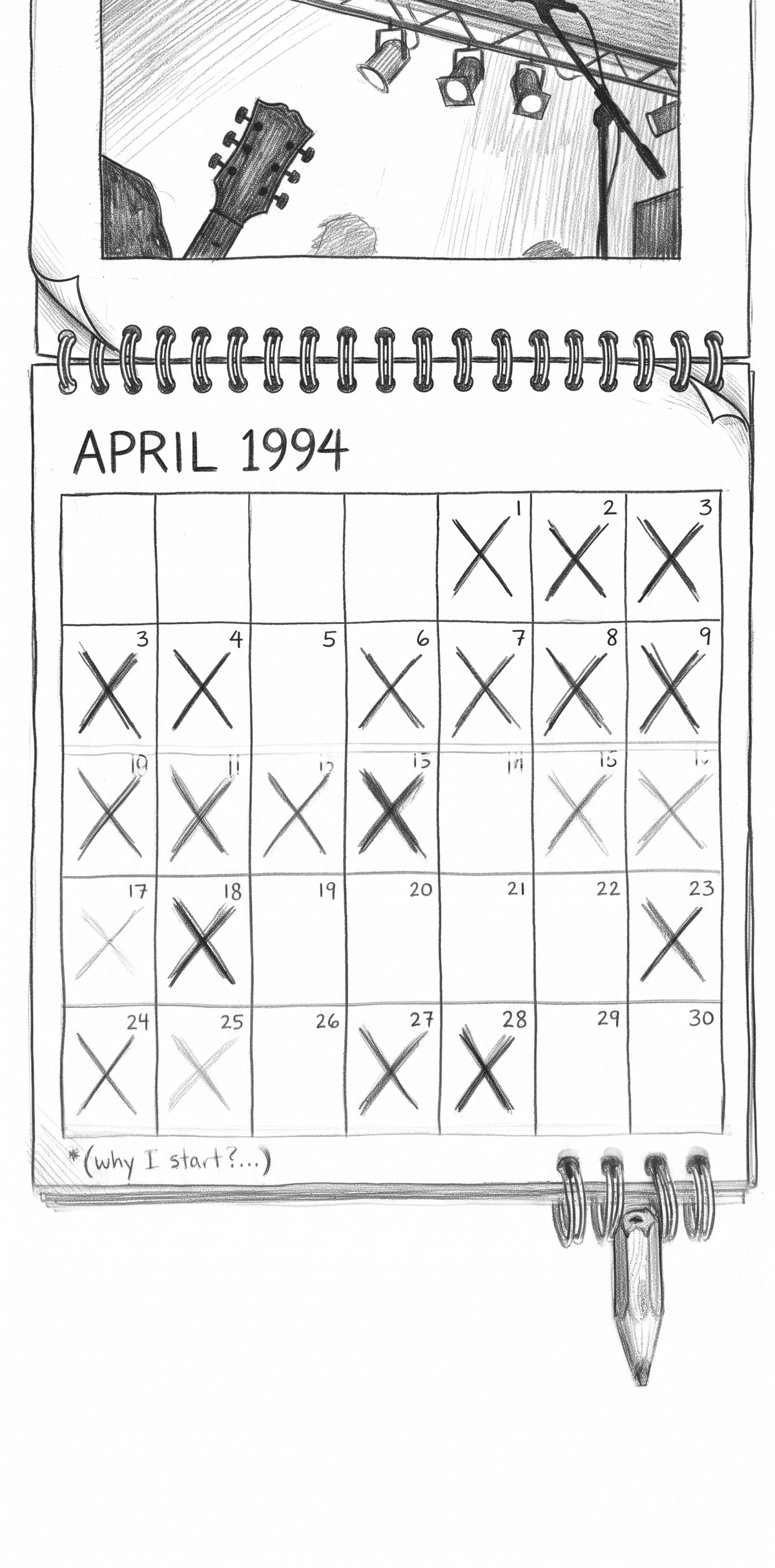
Strategy: Research + Draft See also: Li-8: Wellness Coach (for the emotional side), Li-11: Escaping Social Media (for breaking habits). Oliver Burkeman, Four Thousand Weeks (why systems beat willpower — same thesis, different angle) My Man Jeeves: The self-help industry, one might note, generates roughly $13 billion a year on the premise that one lacks willpower. The applications, the courses, the 30-day challenges — each monetizes the gap between intention and behaviour. Behavioural science has known for decades that the difficulty is not motivation. It is environment design, cue management, and identity. The research is clear and largely disregarded by the industry, for the understandable reason that “redesign your cues” does not sell books in the manner that “unleash your potential” does. One’s Agent has read the actual research. It will assist in designing a system rather than deliver a lecture on discipline. The Spec:
I want to build a habit of [specific habit: exercising, reading,
journaling, cooking at home, practicing an instrument, meditating,
studying, cleaning, etc.].
My situation:
— How long I’ve wanted to do this: [weeks / months / years]
— What I’ve tried: [apps, willpower, accountability partners,
30-day challenges, cold turkey, nothing]
— What keeps going wrong: [I forget / I lose motivation after
a week / I start strong then life gets in the way /
I don’t know where to start / I feel guilty and quit]
— When and where I would do this: [morning / evening / specific
trigger — or “I don’t know, help me figure that out”]
Please help me:
1. Design a version of this habit small enough that I cannot
talk myself out of it — the minimum viable version
2. Identify an existing daily cue I should attach it to
3. Build a two-week starter plan that assumes I will
miss days — because I will
4. Tell me what the research says about how long this
actually takes (it is not 21 days)
What to do with the Output: Do the minimum version today. Not tomorrow. The research says the hardest gap to close is between “I should” and “I did it once.” Everything after the first time is easier. If your Agent suggests a two-minute version of the habit and that feels too small, it is the right size. Scale up after it is automatic, not before.
Starting small is not just a comfort — it matches the research, and it corrects a popular myth about the timeline.
Li-13: Using Your Public and Academic Library
Strategy: Navigate + Research See also: WB-10: Doing Real Research with Your Agent (the matched companion — Agent surfaces the claim, library hands you the source), Li-10: Learn a Language (many libraries include Mango and Pimsleur for free), Li-9: Making a Household Budget That Holds (the library replaces several paid subscriptions), M-6: Financial Coach (libraries often host free tax prep and financial counseling) My Man Jeeves: A peculiarity of the American civic landscape, one might venture to note, is that a considerable portion of the population pays a monthly fee for streaming services, audiobook subscriptions, and newspaper access while remaining entirely unaware that the building with the flag and the reading room provides most of it gratis. The public library is, in the plainest accounting, the single best deal available to the ordinary citizen — a tax-funded institution that lends books, audiobooks, films, museum passes, internet access, meeting rooms, and the professional assistance of a reference librarian whose job, one feels obliged to mention, is to answer the question one is reluctant to admit one has. The academic library, should one be within driving distance of a state university, is in many jurisdictions equally available — one simply needs to know to walk in. One’s Agent can be of considerable assistance in discovering what one’s particular library actually offers, which is, as a rule, rather more than one supposed. The Spec:
I want to use my local library more effectively — and any
academic libraries I’m entitled to use.
My situation:
— My city/county: [location]
— My library card situation: [I have one / I don’t / I’m not sure
if it’s still active / I don’t know where to get one]
— My alma mater, if any: [school] — and whether they offer
alumni library privileges
— What I’m trying to do: [read more / research a topic /
learn a skill / access academic papers / save money on
streaming / find a quiet place to work / get help with
taxes or forms / help my kid with school]
Please help me:
1. Inventory what my specific library system offers — borrowing
(books, ebooks, audiobooks via Libby/OverDrive, films via
Kanopy/Hoopla), databases (JSTOR, Gale, ProQuest, Ancestry,
Consumer Reports), and services (tutoring, tax prep, passes,
meeting rooms, Wi-Fi hotspots, tool lending)
2. Tell me which nearby academic libraries I can use as a
member of the public — many state universities grant
walk-in access, and some offer borrowing cards to residents
3. Explain interlibrary loan (ILL) — what it is, how to request
a book my library doesn’t own, and roughly how long it takes
4. Surface the free, globally-open digital archives most relevant
to [my topic / interest / research question] — government
archives, university special collections, museum open-access
programs, subject-specific repositories, national libraries
outside the U.S. if relevant. Favor primary sources over
aggregators. For each, tell me what’s actually in it and
how to search it
5. Tell me what I should ask a reference librarian that I’ve
been asking you — where their help beats mine, and where
it complements mine
What to do with the Output: Walk in this week. Not someday — this week. Libraries are one of the few institutions where showing up and saying “I’m new, can you help me?” is the expected move, not the awkward one. Download Libby before you go and link it to your card at the desk; you’ll leave with your entire ebook and audiobook backlog handled. If you had a library card once and let it lapse, the staff will reactivate it without comment or fee. If you last walked into a library in high school and assumed the building had been replaced by the internet, the reverse happened — most libraries now lend technology, host maker spaces, process passport applications, and connect patrons with social services. You did not outgrow the library. It outgrew your last visit. Then pair this with your Agent: when your Agent gives you a citation in a research conversation (see WB-10), the library is how you read the actual paper, not the summary.
Academic access is the part most people never check. Most U.S. state university libraries admit the public to the physical collection under state resident or community borrower programs — Ohio’s OhioLINK, California’s state university system, the Big Ten Academic Alliance, and most SEC and ACC libraries all have a public pathway, typically a free or modest-fee borrower’s card for residents of the state. WorldCat locates any book in any library in the world and is free to search. The Library of Congress issues a free reader’s card to anyone 16 or older with a photo ID. Your alma mater may grant alumni library privileges — often JSTOR and database access included — even if you graduated decades ago. Ask.
Science Note: Library anxiety — the intimidation adults feel navigating an unfamiliar library — is a documented phenomenon: 75–85% of students in Mellon’s (1986) original study described their first library experience in terms of fear.[17] If you feel lost walking in, you are not unusual; helping people who feel lost is most of a librarian’s job.
Veterans and active-duty service members: the DoD Morale, Welfare, and Recreation (MWR) Digital Library (dodmwrlibraries.org) provides free access to OverDrive/Libby, O’Reilly technical books, Ancestry.com Library Edition, and other databases — accessible with a DoD ID. Military OneSource (800-342-9647) connects to these same resources and remains available for 365 days after separation. Several state library systems run dedicated veterans programs — California’s Veterans Connect @ the Library partners with CalVet for benefits navigation at library branches statewide.
-
[1] Gottman, J.M. et al. (1998). “Predicting Marital Happiness and Stability from Newlywed Interactions.” Journal of Marriage and the Family, 60(1), 5–22.↩
-
[2] Gottman, J.M. (1999). The Marriage Clinic. W.W. Norton.↩
-
[3] Cialdini, R.B. (1984). Influence: The Psychology of Persuasion. William Morrow.↩
-
[4] KFF, “Health Provisions in the 2025 Federal Budget Reconciliation Law.” See also Medicaid.gov for state-specific eligibility thresholds and the five-year lookback rules.↩
-
[5] AARP & National Alliance for Caregiving. (2020). “Caregiving in the United States 2020.” Follow-up: AARP. (2023). “Valuing the Invaluable: Strengthening Supports for Family Caregivers.”↩
-
[6] Schulz, R. & Sherwood, P.R. (2008). “Physical and mental health effects of family caregiving.” American Journal of Nursing, 108(9 Suppl), 23–27. The 63% figure originates with Schulz & Beach (1999). “Caregiving as a risk factor for mortality: the Caregiver Health Effects Study.” JAMA, 282(23), 2215–2219.↩
-
[7] Genworth & CareScout. “Cost of Care Survey 2024.” National monthly medians.↩
-
[8] Baumrind, D. (1966). “Effects of Authoritative Parental Control on Child Behavior.” Child Development, 37(4), 887–907.↩
-
[9] Sun, C.F., Correll, C.U., Trestman, R.L., et al. (2023). “Low availability, long wait times, and high geographic disparity of psychiatric outpatient care in the US.” General Hospital Psychiatry, 84, 12–17. In-person psychiatry median 67 days; telepsychiatry 43 days.↩
-
[10] Mullainathan, S. & Shafir, E. (2013). Scarcity: Why Having Too Little Means So Much. Times Books.↩
-
[11] Krashen, S.D. (1982). [Principles and Practice in Second Language Acquisition.](https://www.sdkrashen.com/content/books/principlesandpractice.pdf) Pergamon Press.↩
-
[12] Braghieri, L., Levy, R., & Makarin, A. (2022). “Social Media and Mental Health.” American Economic Review, 112(11), 3660–3693. See also Bekalu, M.A., McCloud, R.F., & Viswanath, K. (2019). “Association of Social Media Use With Social Well-Being, Positive Mental Health, and Self-Rated Health: Disentangling Routine Use From Emotional Connection to Use.” Health Education & Behavior, 46, 69S–80S (Harvard T.H. Chan School of Public Health).↩
-
[13] Prieto-Latorre, C. et al. (2022). “Internet use and academic performance: An interval approach.” Education and Information Technologies. See also Firth, J. et al. (2019). “The ‘online brain’: how the Internet may be changing our cognition.” World Psychiatry, 18(2), 119–129.↩
-
[14] Lally, P. et al. (2010). “How are habits formed: Modelling habit formation in the real world.” European Journal of Social Psychology, 40(6), 998–1009.↩
-
[15] Institute of Museum and Library Services (IMLS), Public Libraries Survey. Annual. FY2023 data released August 2025. OverDrive. (2026, January 21). “Libraries Break Digital Lending Records in 2025 with Over 820 Million Checkouts.” Calendar-year 2025 figures.↩
-
[16] Bureau of Business Research, University of Texas at Austin (2017), Texas Public Libraries: Economic Benefits and Return on Investment: $4.64 returned per dollar invested (FY2015 data). Library Research Service, Colorado (2006), Public Libraries — A Wise Investment: approximately 5:1.↩
-
[17] Mellon, C.A. (1986). “Library Anxiety: A Grounded Theory and Its Development.” College & Research Libraries, 47(2), 160–165. See also Jiao, Q.G. & Onwuegbuzie, A.J. (1997). “Antecedents of Library Anxiety.” Library Quarterly, 67(4), 372–389.↩